





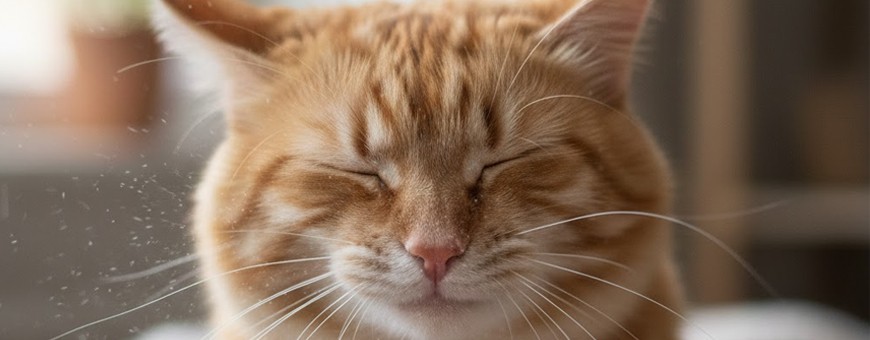
Sneezing in Cats: Causes, When to Worry, and What to Do
Sneezing in cats is a relatively common symptom and, in many cases, does not represent a serious problem. However, when it occurs frequently or is accompanied by other signs, it may indicate a health issue that requires veterinary attention. Knowing the most common causes and identifying warning signs is key to taking timely action.
Is it normal for a cat to sneeze?
An occasional sneeze in cats is usually normal. It can be caused by mild irritation of the respiratory tract, dust in the environment, or a sudden change in temperature. Just like in humans, sneezing is a defense mechanism to expel foreign particles from the nose.
The problem arises when sneezing is persistent, intensifies over the days, or presents alongside other symptoms.
Why does a cat sneeze? Main Causes
Mild causes and environmental factors
Multiple external factors can trigger sneezing without a serious illness being behind it:
- Dust, mites, and allergens present in the home.
- Low temperatures or drafts, which increase the risk of mild colds.
- Foreign bodies such as lint, seeds, or spores lodged in the nasal cavity.
- Chemical irritants, such as perfumes, air fresheners, cleaning products, or smoke.
In these cases, sneezing is usually sporadic and disappears once the irritant is removed.
Frequent infections and diseases
When sneezing is continuous or accompanied by other symptoms, it may be related to infections affecting the cat's respiratory or immune system:
- Cat Flu: One of the most common causes.
- Feline Herpesvirus and Calicivirus: Highly contagious among cats.
- Feline Immunodeficiency Virus (FIV): Weakens the immune system and encourages secondary infections.
The most vulnerable cats are usually young ones, those with outdated vaccination schedules, or those already suffering from another disease.
Symptoms indicating a health problem
When sneezing is a cause for concern
It is advisable to pay special attention if sneezing appears along with any of the following symptoms:
- Nasal mucus or eye discharge.
- Constant tearing.
- Gingivitis or inflamed gums.
- Weakness, lethargy, or loss of appetite.
- Digestive symptoms (vomiting/diarrhea).
Sneezing blood in cats: Possible causes
The appearance of blood when sneezing should never be considered normal. It can be caused by:
- Previous bumps or trauma to the nasal area.
- Fungal infections.
- Neoplasms or more serious processes in the respiratory tract.
In this situation, a visit to the veterinarian is essential.
What to do if a cat sneezes?
Initial measures at home
- Keep the home clean and dust-free.
- Avoid the use of perfumes, air fresheners, and intense chemical products.
- Protect the cat from cold and drafts.
- Observe progress over the following days.
When to see a veterinarian
It is essential to consult a professional if:
- Sneezing lasts for several consecutive days.
- Discharge, fever, or lethargy appear.
- The cat stops eating or drinking.
- Blood is observed when sneezing.
Frequently Asked Questions
What happens if my cat sneezes?
An isolated sneeze is normal, but if it's frequent, it indicates infection or irritation.
How do I know if my cat has a cold?
Signs include persistent sneezing, nasal discharge, watery eyes, lethargy, and lack of appetite.
What should I give a cat if they start sneezing?
Never medicate without veterinary advice. Control the environment and observe.
What are the symptoms of feline distemper?
It causes sneezing, discharge, fever, digestive problems, and significant lethargy.
Leave a Reply Cancel Reply