




Dog ages: how to calculate your dog’s age without falling for the “×7” myth
If you're here, it's because the usual has happened: you look at your dog, seeing them as happy as ever... and suddenly the question arises: "Okay, but what does this mean in human years?". And of course, the famous 1 dog year = 7 human years rule pops up. Spoiler: it works for a quick conversation, but if you really want to understand dog ages, it falls incredibly short.
The real eye-opener is understanding two things: dogs age much faster at the beginning, and a small dog doesn't age the same way a large one does (nor does an "all-terrain" mixed breed age like a specific breed with more genetic predispositions to health issues). With that idea in mind, let's turn "dog age" into something useful: number + stage + care.
Orientative Table + Key Idea
Orientative table with stages. It should be used as a "map," not as a final verdict.
Note: This is a general approximation. "Real" age changes a lot depending on size/weight, breed, and lifestyle.
| ? Dog Age | ? Human Age | Stage |
|---|---|---|
| 2 months | 1 year | Explorer Baby |
| 6 months | 5 years | Restless Childhood |
| 1 year | 15 years | Rebellious Teenager |
| 3 years | 28 years | Young Adult |
| 5 years | 37 years | Full Adult |
| 7 years | 47 years | Maturity |
| 10 years | 62 years | Senior |
| 12+ years | 72+ years | Wise Grandparent |
Why “1 dog year = 7 human years” is too simple
The x7 rule fails for a very simple reason: the first stage of a dog's life goes at full throttle. In one year, a dog goes from "explorer baby" to "rebellious teenager" (and anyone who has lived with a puppy knows: that change is noticeable).
In other words: if you apply x7, the first year would be 7 human years... but the table is already telling you 15. And that difference matters when making decisions about routine, exercise, or check-ups.
Quick Rule (Approximate)
If you want a quick rule:
- 1 year usually equals human adolescence (approx. 15).
- From there, the rhythm "stabilizes," but it depends on size (small dogs "hold out" longer, large dogs "age" sooner).
How to calculate a dog's age in human years (methods that actually make sense)
Method 1 — Conversion by Stages (early years age faster)
This method is the most useful for day-to-day life because it doesn't obsess over the exact figure, but rather the context:
- Puppy (0–12 months): rapid changes, accelerated physical and behavioral maturation.
- Young Adult (1–3): high energy, body "finished," consolidatable learning.
- Full Adult (4–6): physical and mental stability (if all goes well).
- Maturity (7–9): they start to "think twice" (especially in large breeds).
- Senior (10+): the body asks for more care: weight, joints, dental, check-ups.
Here, the table works great as a "stage translator": having a "7-year-old" dog that is in maturity is not the same as treating them like a young kid.

Method 2 — A “Finer” Formula (with Logarithms) and Easy Examples
For a more precise correlation than the x7, there is a formula based on university research that summarizes as follows: Human years = 16 × ln(dog's age) + 31 (where ln is the natural logarithm of the dog's age).
Don't be scared by the "ln." The practical idea is that aging is not linear; at the beginning it "adds up" a lot and then it goes more smoothly.
- At 1 year old, the result falls near a young human adolescent age (matching your orientative "15").
- As the age increases, the formula adjusts better than the x7, especially in middle ages.
It can be used like this: to fine-tune when comparing (for example) if a 10-year-old dog "behaves" like an advanced senior or a moderate senior... but always cross-referencing it with size and physical signs.
Method 3 — Table by Size (small, medium, large, and giant)
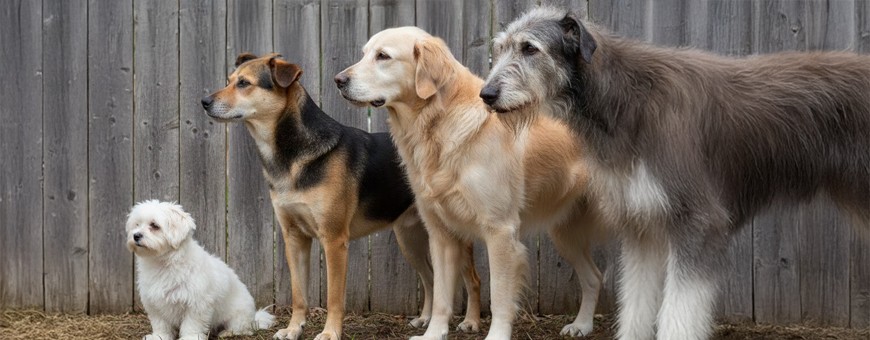
This is the point people usually overlook: in dogs, small ones tend to live longer than large ones. This breaks the intuition of "large animals live longer" that we see in other species.
In practice: small dogs reach senior status later; large and giant dogs become "seniors" earlier, and the total lifespan margin is usually smaller.
Here is a fact that leaves many amazed when they hear it for the first time: a giant 15-year-old dog could be equivalent to an extremely old human age (some have mentioned something like "115" to illustrate the wear and tear). The exact figure may vary by table/method, but the message is crystal clear: you cannot measure a Chihuahua the same way as a Mastiff.
Equivalence Table: Dog Age vs. Human Age (by size)
To avoid overwhelming you with huge tables, here is a summary of how the "stage" changes depending on size.
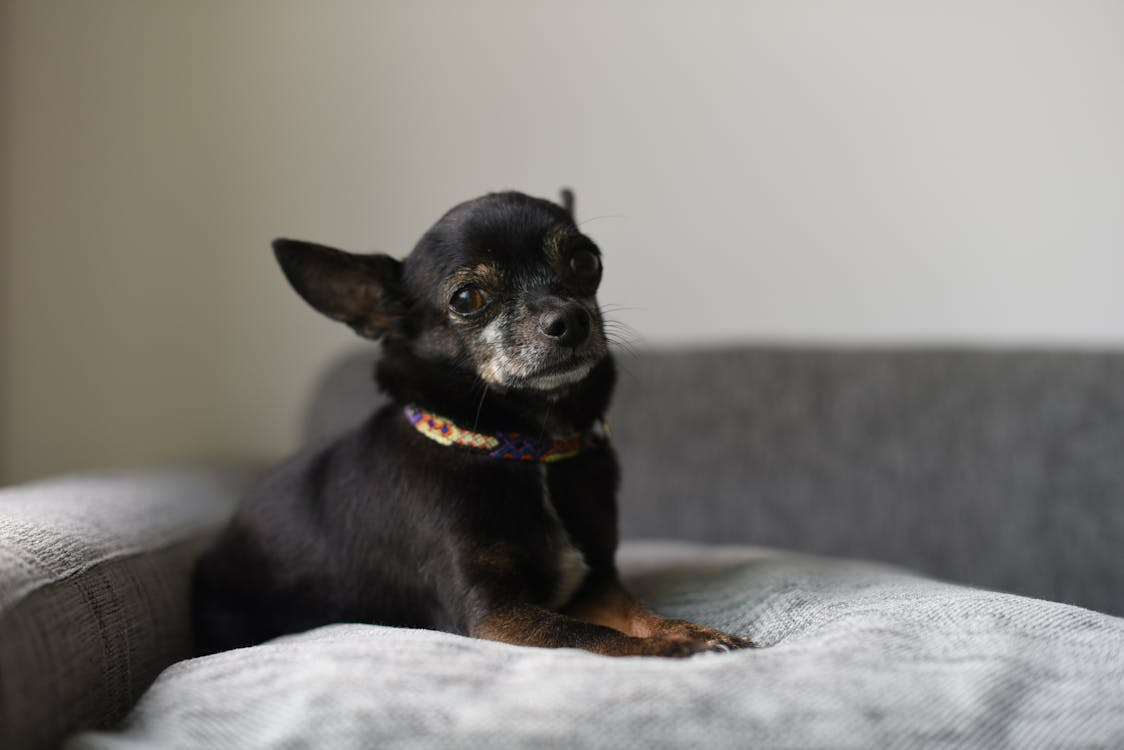
Small Dogs: when are they considered adults and when are they seniors
- They are usually adults around the 1st year (on a practical level).
- Many enter senior status later (often starting at 10–11, depending on the case).
How you notice it in real life: when a small dog starts to "ask" for less intensity on walks but still has mental spark, they are usually in late maturity rather than pure "old age."
Medium Dogs: the real tipping point
- The transition to "older" usually appears earlier than in small dogs, but later than in large ones.
- From 7–9 years, many start to appreciate more careful routines.
Here, the "7 years = maturity" table fits very well as a base.
Large and Giant Dogs: why they "get older" sooner
In large and giant breeds, the body supports more load. That's why joint wear arrives earlier, weight control is more critical, and the jump to "senior" can happen sooner (sometimes it's noticeable from 7–8 years old).
The main idea is: in large dogs, prevention is worth double. If you wait until it's "already noticeable," you're late.

At what age is a dog old? (signs beyond the number)
The million-dollar question: "Is a 7-year-old dog already old?". The honest answer is: it depends, but there are signs that never fail.
Typical Senior Dog Signs (energy, mobility, weight, sleep)
More than counting years, you have to look at:
- Mobility: trouble getting up, stiffness when cold, avoids jumping.
- Sleep: sleeps more and deeper.
- Weight: goes up without changing food much (or goes down for no clear reason).
- Stamina: gets tired sooner on walks they used to enjoy.
- Mind: sometimes just as sharp... but with less "gas."
This is important because even if the "human years" conversion gives you X, the body marks the real stage.
Recommended Veterinary Check-ups by Stage
- Adult: periodic check-ups + vaccines/deworming.
- Maturity: start looking at teeth, weight, and joints with more care.
- Senior: more complete check-ups (blood work, dental, mobility), because this is where the "invisible pillar" of health is noticed.
Factors Influencing Longevity (and why not all age equally)
Breed and Genetics: what to know before comparing ages
Selective breeding has created breeds with very distinct traits... and sometimes associated problems. Reference materials mention clear examples like Shar-Pei and Pugs: beautiful dogs, yes, but with predispositions to certain pathologies that can complicate their lives if not managed well.
Practical conclusion? If you compare ages between dogs, also compare the typical health history of the breed, body conformation, and real quality of life.
Size/Weight: the big difference between mini and giant
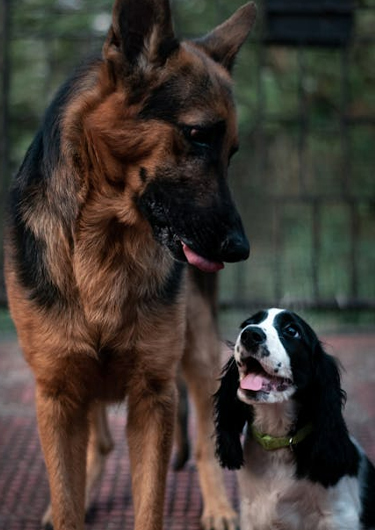
It's key: small dogs are generally longer-lived; large dogs age sooner. Weight is the silent accelerator: an overweight dog "ages" sooner because they put more load on joints and their metabolism suffers more.
Lifestyle: nutrition, exercise, teeth, and joints
If you want to ensure age doesn't take its toll:
- Adjusted food portions (not "by eye").
- Constant but sensible exercise.
- Dental care (yes, it matters more than it seems).
- Joint support when appropriate (based on veterinary recommendation).
Typical Cases People Search on Google (with clear answers)
How much is 1 year in dogs?
As a general orientation, around 15 human years (the table nails it as a quick answer). But remember: size rules.
How many human years is 10 dog years?
In the table, 62 (senior). In real life: for a small dog it can be a "strong" senior, for a large dog, it can be a more advanced senior. If your 10-year-old dog still runs like a 3-year-old, great... but don't get overconfident: check-ups and well-controlled weight are key.
Is a dog old at 7 years?
The table calls it maturity (47 human years), a very good fit: in small dogs, often not "old," but rather "adult with experience"; in large dogs, it can be the start of "hey, take a little more care of me."
The 3-3-3 Rule (and why it matters when you adopt)
It stands for 3 days, 3 weeks, and 3 months for adaptation to the home:
- 3 days: decompression, nerves, observing.
- 3 weeks: starts to understand routines, settles in.
- 3 months: feels at home and shows their "real self."
Where does this connect with ages? A newly adopted puppy and a newly adopted senior don't "process" things the same way. Age (and stage) changes rhythms, fears, and energy.
How to adapt routines by age
- Puppy: short routines, repetition, sensible socialization.
- Adult: balance between exercise and calm, and mental training.
- Senior: more short walks, joint warmth, and comfort (bed, ramps if needed).
Frequently Asked Questions about Dog Ages
How to know the age of an adopted dog?
Typical clues: teeth (wear, tartar), eyes (cloudiness in older dogs), muscle tone, energy, and recovery after exercise. The ideal is a veterinary estimate, as "eye-balling it" is often wrong.
Does sterilization change aging?
It can influence metabolism and weight, and weight influences wear and tear. It shouldn't be seen as "aging more," but rather "adjusting diet and routine."
Do mixed breeds live longer?
It's often said they do because of robustness and genetic diversity, but the practical key is: real health + weight + care. Dogs more "wolf-like" in appearance or mixed breeds are often recommended over highly selected breeds due to predisposition issues.
Leave a Reply Cancel Reply