




Afghan Hound: characteristics, temperament, care and diet.
The Afghan Hound is one of those dogs you can’t look at just once. It has an elegant presence, a long coat that looks almost show-worthy, and a very distinctive way of moving: light, refined and almost feline. But it would be a mistake to focus only on its appearance. Behind that striking look there is a sensitive, intelligent, independent dog with very specific needs.
In my case, when I talk about the Afghan Hound, I always start with the same idea: it is a spectacular breed, yes, but it is not a low-maintenance dog. Its coat requires consistency, its temperament requires understanding, and its daily routine must be well planned so it can be a balanced, calm and happy dog.
Also known as the Afghan Greyhound or Afghan Hound, this dog belongs to the sighthound group: agile, streamlined breeds traditionally linked to running and hunting by sight. Today, however, many people know it mainly as a companion dog because of its beauty, elegance and unmistakable distinguished air.
Throughout this guide, I’ll explain what the Afghan Hound is really like: its physical characteristics, temperament, care, diet, health and everything you should consider before living with one.

What is an Afghan Hound and why does it attract so much attention?
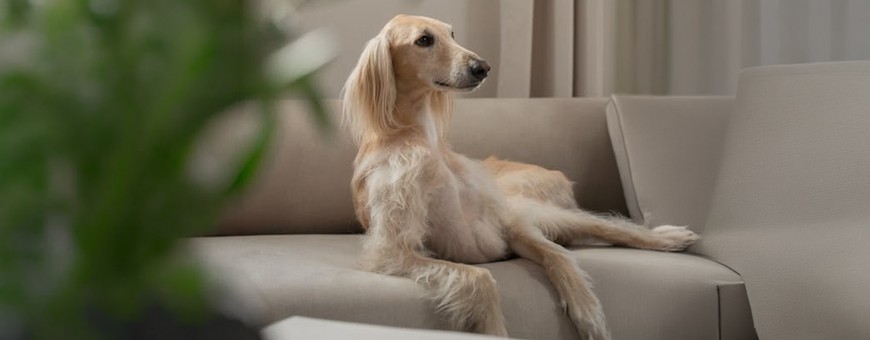
The Afghan Hound is a medium-large dog breed with a slender body, long muzzle, dropped ears and a long, fine and abundant coat. It is a dog that combines an aristocratic appearance with an independent spirit. It is not usually an overly clingy dog, but when it bonds with its family, it can be very affectionate and calm.
The first thing that usually stands out is its coat. In some dogs, it falls so smoothly that it looks like a cloak. This feature, together with its elongated head, elegant neck and slim body, gives it a very recognizable presence. But the more you get to know the breed, the clearer it becomes that beauty is not the only important thing.
The Afghan Hound needs time, routine and someone willing to understand it. It is not enough to want a beautiful dog: you have to accept its needs for brushing, exercise, socialization and training.
Quick facts about the Afghan Hound
| Characteristic | Information |
|---|---|
| Name | Afghan Hound |
| Other names | Afghan Greyhound, Afghan Hound |
| Size | Medium-large |
| Approximate height | Up to around 68 cm |
| Approximate weight | Up to around 28 kg |
| Coat | Long, fine and abundant |
| Temperament | Sensitive, independent, intelligent and affectionate with its family |
| Exercise level | Medium-high |
| Suitable for apartments | Yes, if it gets enough walks and a stable routine |
| Delicate point | Coat maintenance, socialization, exercise and patience in training |
Origin of the Afghan Hound
The Afghan Hound is an ancient breed historically associated with mountainous areas and demanding terrain. Like other sighthounds, it was selected for its speed, endurance and visual ability. Its light body, long legs and agility make a lot of sense when you understand its functional origin.
Over time, it went from being a dog linked to work and hunting to also becoming a companion and show dog. Its elegant appearance made it very popular in environments where beauty was highly valued, but that does not mean it has lost its sighthound personality: it remains an active, sensitive and independent dog.
An elegant, ancient dog with a lot of personality
The Afghan Hound is not the typical dog that seeks to obey automatically. It has character. It can be sociable, loving and gentle, but also somewhat reserved or selective if it does not feel comfortable. This mix is exactly what makes it so special.
I would not define it as a difficult dog by default, but rather as a breed that needs a patient person. It is intelligent, it learns, observes and understands many things, but it does not always respond with the speed or submissiveness of other breeds that are more eager to please.
Physical characteristics of the Afghan Hound
The Afghan Hound has a very distinctive appearance. It is tall, slim, elegant and has a coat that becomes its signature feature. At first glance, it conveys lightness, but also strength and endurance.
Height, weight and build
An Afghan Hound can reach approximately 68 centimeters in height and weigh up to around 28 kilograms, although there can always be variations depending on sex, genetics and physical condition.
The important thing is to understand that it is not a robust or heavy dog. Its body is slim, long and athletic. It has a streamlined silhouette, long legs, a deep chest and a very fluid way of moving.
When talking about its size, it is worth imagining a tall and slim dog, not a wide or compact one. This build means it needs exercise, but also comfortable rest and joint care, especially as it gets older.
Long, fine and abundant coat
The coat is the most distinctive feature of the Afghan Hound. It is long, smooth, fine and very abundant, especially on the ears, sides, legs and head. In many dogs, the hair on the head extends toward the neck, creating that very characteristic look.
This is where it is important to be very clear: the Afghan Hound’s coat is beautiful, but it requires maintenance. This is not a breed for someone who wants to forget about brushing. Because the hair is fine and long, it can tangle easily if it is not cared for regularly.
In my case, I would be very clear before recommending this breed: its coat is spectacular, but it does not forgive a lack of routine. If it is not brushed, if friction areas are not checked, or if dirt is allowed to build up, knots appear and the dog can become uncomfortable.

Most common Afghan Hound colors
The Afghan Hound can come in different colors. The most common shades include white, beige and black, although dogs with markings, gradients or color combinations can also be seen.
Beyond color, what truly defines its appearance is the texture and length of its coat, along with its slim body, long face and dropped ears. It is a very recognizable breed, even for people who do not know much about dogs.
Afghan Hound temperament: affectionate, independent and sensitive
The Afghan Hound’s temperament often raises many questions. Some people see it as so elegant that they assume it will be distant; others think that, because it is a hound, it will need to run all day. The reality is somewhere in between.
When its needs are met, the Afghan Hound can be a loving, calm and gentle dog. But it is not a decorative stuffed animal. It needs movement, bonding, patience and an environment that respects its sensitivity.
How it behaves at home
At home, a well-cared-for Afghan Hound can be quite calm. After its walks and activity time, it usually enjoys resting. It is not unusual for it to look for a comfortable spot, observe the environment and spend long periods relaxing.
One of the ideas I like to emphasize most is this: the Afghan Hound can be calm, but not by magic. To reach that balance, it needs walks, appropriate stimulation, care and a stable routine.
If it gets bored, does not go out enough or is not understood, it may show more difficult behaviors: pulling on the leash, ignoring recall, becoming restless or growing more reserved.
Relationship with children, other dogs and strangers
The Afghan Hound can live with children and other dogs, but as with any breed, the key is socialization and respect. Interactions should not be forced, and rough play should not be allowed, especially if the dog is sensitive or needs its own space.
With strangers, it may be somewhat distant at first. This does not mean it is aggressive. Often, it simply observes before approaching. It is a breed that appreciates calm approaches and pressure-free introductions.
With other dogs, it can get along well, especially if it has had good experiences since puppyhood or a gradual adaptation in the case of adoption. As a sighthound, it is also worth watching its chase instinct around small animals in open spaces.
Is it easy to train?
The Afghan Hound is intelligent, but it is not always easy to train in the traditional sense. Not because it does not understand, but because it has an independent streak. It can learn commands, routines and boundaries, but it needs motivation, patience and consistency.
Positive reinforcement is usually the best approach: treats, a kind voice, games, calm and repetition. Harsh methods do not suit a sensitive breed and can create mistrust.
I would summarize it like this: it is not a dog to impose on, but one to convince. If it understands that the routine makes sense and that the relationship with its person is safe, it responds much better.
Daily care for the Afghan Hound
The Afghan Hound needs a more demanding care routine than other breeds, especially because of its coat. It also requires exercise, hygiene, check-ups and good emotional management.
It is not an impossible breed, but it does require consistency. Anyone who wants to live with one must accept that care is part of the daily relationship with the dog.
Brushing and coat maintenance
Brushing is one of the most important points. Its long, smooth and abundant coat can form knots if it is not checked frequently. The most delicate areas are usually behind the ears, armpits, legs, chest and areas where the hair rubs more.
Ideally, it should be used to calm brushing sessions from puppyhood or from the beginning of living together. It is not always necessary to turn it into a long session, but it is important to create a pleasant routine.
Good maintenance helps to:
- Prevent knots.
- Remove dirt.
- Detect skin irritations.
- Keep the coat loose and clean.
- Strengthen the bond with the dog.
The most common mistake is waiting until the coat is in bad condition before acting. With this breed, prevention is better than forcing out tangles.
Bathing, hygiene and ear checks
Bathing should be done when the dog needs it, using appropriate dog products and rinsing thoroughly. In an Afghan Hound, poor drying or insufficient brushing after a bath can encourage tangles.
The ears also deserve attention. Since they are dropped and covered with hair, they can accumulate moisture or dirt. They should not be handled excessively, but they should be checked regularly for bad odor, redness or discomfort.
General hygiene includes checking the eyes, nails, teeth, paw pads and skin. With a long-haired dog, many small problems are spotted late if the body is not properly examined during brushing.

Walks, exercise and mental stimulation
The Afghan Hound needs to go out every day. A short walk just to “do its business” is not enough. It is an athletic dog, with energy and a need to explore.
It is best to combine calm walks with moments of more intense activity in safe areas. Safety is important because sighthounds can suddenly start running if something triggers their chase instinct.
It also needs mental stimulation: sniffing, search games, short training sessions and varied routines. Not everything has to be about running. In fact, many hounds really enjoy walks where they can smell, look around and move without stress.
Routines that help it stay calm
The Afghan Hound usually responds well to stable routines. Knowing when it eats, when it goes out, where it rests and what is expected of it helps it become more balanced.
In my experience, when its basic needs are covered —walks, rest, bonding, food and coat care— its best version appears: a calmer, more affectionate and more manageable dog.
This is not a breed that handles constant chaos well. It can adapt to family life, even in an apartment, but it needs clear structure and enough daily activity.
Afghan Hound diet: what to consider
The Afghan Hound’s diet should be adapted to its age, size, activity level, digestion and overall condition. Not all dogs need the same thing, but it is advisable to look for a complete, digestible diet suitable for medium or large dogs.
In this breed, diet also influences the condition of the skin, the shine of the coat, energy levels and body condition. An Afghan Hound should not be overweight, but it should not be too thin because of a poorly adjusted diet either.
How to choose a suitable diet for its size and activity
To choose well, I would look at these points:
- That it is a complete food.
- That it is adapted to an adult dog, puppy or senior dog, as appropriate.
- That it matches its size and activity level.
- That it has good digestibility.
- That it provides quality proteins.
- That it includes healthy fats, such as omega 3 and omega 6.
- That it does not upset its digestion.
In puppies, the diet should support growth without excesses. In adults, it should maintain muscle, energy and coat condition. In older dogs, a more digestible recipe or one with joint support may be useful, always following veterinary advice if there is a specific condition.
Dapac options for medium and large dogs
Among Dapac’s options, several alternatives can be integrated depending on the Afghan Hound’s profile.
For example, Zen Low Grain Large Adult Chicken is aimed at adult large-breed dogs from 15 months of age, with chicken and a high-digestibility proposal. It can suit adult Afghan Hounds that need a complete and stable diet.
For adult medium or large dogs with more sensitive digestion, Zen Low Grain Adult Medium Large Sensitive can be an interesting alternative, as Dapac presents it as a complete food with salmon, high digestibility and no soy, wheat or corn.
Another option is Zen Low Grain Adult Lamb, formulated for adult dogs of any breed from 12 months of age, with lamb and high digestibility. It can be useful when looking to vary the protein source or use a recipe different from chicken.
The Zen Grain Free line can also be considered for adult or senior dogs when looking for a grain-free option focused on digestion, weight control and coat shine, always checking that it suits the individual dog.
The idea is not to choose based on trends, but on tolerance, life stage and real needs. If the dog has digestive problems, allergies, hair loss, itching or weight changes, it is best to consult the veterinarian before changing the diet.
Food for skin, coat and sensitive digestion
In a long-haired breed like the Afghan Hound, diet can greatly support coat condition. It does not replace brushing, but it can influence hair and skin quality.
For skin and coat, recipes with the following are usually of interest:
- Quality animal proteins.
- Omega 3 and omega 6 fatty acids.
- Good digestibility.
- Ingredients the dog tolerates well.
- Balanced energy to maintain proper body condition.
If the dog has sensitive digestion, frequent soft stools, itching or poor coat condition, it is worth reviewing its diet. Sometimes adjusting the main protein source or switching to a more digestible recipe is enough. Other times, veterinary problems must be ruled out.
Health and life expectancy of the Afghan Hound
The Afghan Hound is generally considered a breed with good overall health, although that does not mean it can be neglected. Like any dog, it needs prevention, vaccinations, veterinary check-ups and attention to physical or behavioral changes.
How long does an Afghan Hound live?
The average life expectancy of the Afghan Hound is usually around 8 to 10 years, although with good care some dogs may live 12, 14 or even more years.
Many factors influence this: genetics, diet, exercise, dental health, check-ups, proper weight, parasite prevention, vaccinations and quality of life.
In my case, I prefer to put it this way: rather than obsessing over an exact number, the important thing is to build a routine that supports a long and comfortable life.
Vaccinations, check-ups and veterinary prevention
Although the Afghan Hound is not described as a breed especially prone to serious congenital diseases, you should not let your guard down. Vaccinations, check-ups and veterinary prevention are still essential.
A good health plan should include:
- Up-to-date vaccination.
- Internal and external parasite prevention.
- Dental check-up.
- Weight control.
- Skin and coat checks.
- Ear checks.
- Mobility and joint assessment.
Prevention is especially important because many problems are detected more easily when the dog is checked regularly, not only when obvious symptoms appear.
Signs to watch for in skin, coat, ears and mobility
In the Afghan Hound, it is worth paying attention to signs such as:
- Excessive hair loss.
- Very frequent knots.
- Itching.
- Bad odor in the ears.
- Skin redness.
- Limping.
- Stiffness when getting up.
- Changes in appetite.
- Apathy.
- Sudden weight loss or gain.
Its coat can hide skin problems or small lumps, so brushing also works as a body check. Each session can help detect something that would otherwise go unnoticed.
Afghan Hound puppy: first care steps
An Afghan Hound puppy needs a solid foundation: socialization, gentle training, routine, proper diet and positive handling of its coat.
The first months are key because many things that will later become normal —brushing, bathing, ear checks, walks, contact with people and other dogs— should be introduced gradually and without fear.
Socialization from an early age
Socialization does not mean exposing the puppy to everything all at once. It means introducing the world gradually and positively: people, balanced dogs, sounds, surfaces, cars, the veterinarian, brush, leash and different environments.
A well-socialized Afghan Hound usually manages adult life better. It may still be reserved, because that is part of its temperament, but it will have more tools to adapt.
Training with patience and positive reinforcement
Training should start early, but without harshness. Ideally, work on recall, leash walking, calmness, handling, waiting, name recognition and basic routines.
With this breed, patience is essential. It is not advisable to get into power struggles. It works better to reward what it does well, repeat calmly and avoid situations where the puppy becomes too frustrated.
Adapting to the family routine
The puppy should learn to rest, stay calm, accept brushing and understand household schedules. The sooner these routines become normal, the easier adult life will be.
It is also important not to overprotect it. An Afghan Hound can be sensitive, but it needs experiences. The key is to support it properly, not isolate it.
Is the Afghan Hound the right breed for you?
The Afghan Hound can be a wonderful companion, but it is not the ideal breed for everyone. Before living with one, it is important to honestly consider the time available, patience, routine and real willingness to care for its coat.
Who I do recommend this breed for
The Afghan Hound can be a very good fit for people who:
- Enjoy caring for a dog’s coat.
- Have time for daily walks.
- Value an elegant dog with personality.
- Understand that it will not always obey automatically.
- Can provide a stable routine.
- Prefer training with patience and positive reinforcement.
- Are looking for a sensitive, calm and affectionate dog when balanced.
It is a beautiful breed for someone who enjoys the full process: walking, brushing, observing, training and building a bond.
Who it may not be the best option for
It may not be the best breed for someone who:
- Wants a low-maintenance dog.
- Does not have time to brush it.
- Wants immediate obedience.
- Cannot provide quality walks.
- Gets impatient with independent dogs.
- Does not want to dedicate attention to hygiene and check-ups.
If someone only falls in love with the Afghan Hound’s photo, but not with the routine behind it, they should probably think twice.
What to consider before adopting or buying an Afghan Hound
Before making a decision, it is worth considering:
- Real time available for coat care.
- A resting space.
- Walking routines.
- Budget for food and veterinary care, without needing to get into figures.
- Previous experience with sensitive dogs.
- Availability for training and socialization.
- Responsible origin of the dog.
- Health condition and veterinary documentation.
If it is an adoption, the adjustment period must be taken into account. If it comes from a breeder, it is important to check ethics, health, socialization and breeding conditions. In both cases, the priority is to think about the dog’s long-term welfare.
Frequently asked questions about the Afghan Hound
What is the Afghan Hound’s temperament like?
The Afghan Hound is usually intelligent, sensitive, independent and affectionate with its family. It may seem somewhat distant with strangers, but when it feels comfortable, it is calm and loving.
It is not a “simple” dog in terms of temperament. It has personality and needs patient training. If its needs are met, it can be calm, gentle and very pleasant at home.
Is the Afghan Hound aggressive?
No, the Afghan Hound is not an aggressive breed by nature. It can be reserved, sensitive or somewhat distrustful if it has not been well socialized, but that is not the same as aggression.
As with any dog, genetics, training, experiences, health and daily handling all play a role. Proper socialization and respectful treatment are essential.
How many times should an Afghan Hound be taken out?
Ideally, it should go out several times a day, combining walks for basic needs with quality walks where it can walk, sniff and move. Minimal outings are not enough.
It is also advisable to offer activity in safe areas, since as a sighthound it can run very powerfully if something catches its attention.
What is the 3-3-3 rule in hounds?
The 3-3-3 rule is often used in adoptions and refers to approximate adjustment times: the first 3 days to start settling in, the first 3 weeks to understand routines and the first 3 months to feel more integrated.
It is not an exact formula, but it helps remind us that a dog needs time. With an Afghan Hound, or any adopted hound, patience is key.
Does the Afghan Hound shed a lot?
It can shed, but the most important thing in this breed is not only shedding, but coat maintenance. Its long, fine coat needs frequent brushing to prevent knots and keep the skin in good condition.
Good brushing reduces tangles, improves hygiene and helps detect problems early.
What does an Afghan Hound eat?
It should eat a complete food suitable for its age, size, activity level and digestive tolerance. In adults, recipes for medium or large dogs with good digestibility and quality proteins may fit well.
Within Dapac, options such as Zen Low Grain Large Adult Chicken, Zen Low Grain Adult Medium Large Sensitive or Zen Low Grain Adult Lamb can be considered depending on the dog’s profile. Ideally, choose according to life stage, activity and tolerance, not just the brand.
Can it live in an apartment?
Yes, an Afghan Hound can live in an apartment if it gets enough walks, daily activity, rest and a stable routine. The size of the home matters less than the quality of life offered.
That said, it is not a dog to be kept indoors without stimulation. It needs to go out, move, sniff, interact and have moments of calm.
Conclusion: a spectacular dog, but not for everyone
The Afghan Hound is an impressive breed: elegant, ancient, intelligent, sensitive and with a coat that does not go unnoticed. But precisely because of that, it is important to look at it realistically. It is not just a beautiful dog; it is a companion with specific needs.
Its long coat requires consistency, its independent temperament asks for patience, and its well-being depends on a balanced routine. When all of that is met, it can be a loving, calm and very special dog.
I would recommend it to people who do not only fall in love with its appearance, but also with what caring for it involves: brushing it, walking it, understanding it and respecting its way of being. Because that is the key to the Afghan Hound: the better you understand it, the more you enjoy its company.
Leave a Reply Cancel Reply