




Forbidden foods for cats: Toxic and dangerous items to avoid.
If you have a cat, sooner or later you ask yourself the same question: can I give them this or not?
And the problem is that many "normal" foods for us can be very dangerous for them, even in small quantities. Over time, and after informing myself well when I had real doubts, I learned that there are not only toxic foods, but also others that, due to their preparation or composition, can end up in a veterinary emergency. Here is the clear and updated guide.
Non-recommended foods that can cause serious problems
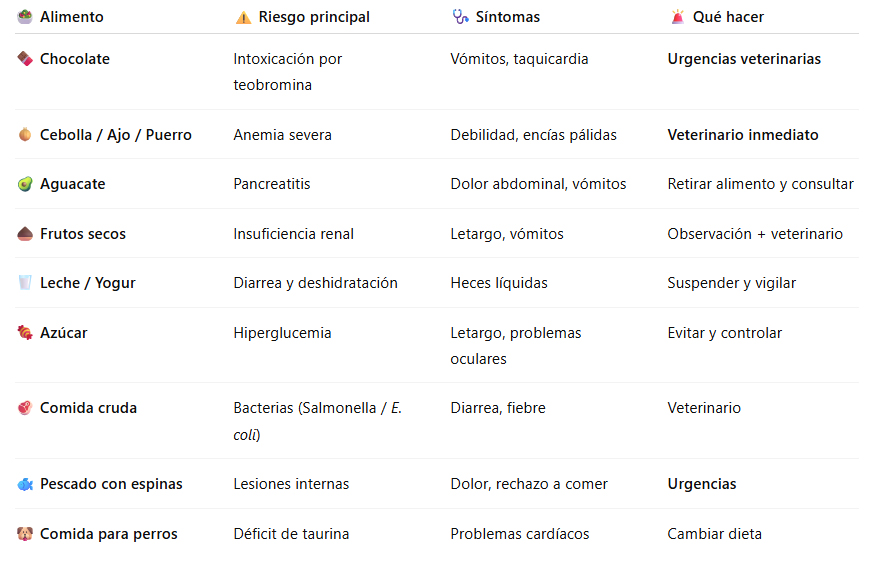
Nuts: Regardless of the type, their consumption can end up causing kidney failure and serious digestive problems.
Avocado: It is a very fatty fruit and, based on experience and documentation, it can trigger pancreatitis in a short time. It is not a "healthy" food for cats.
Deli meats and very salty foods: Excess salt, fats, and preservatives lead to dehydration, kidney problems, and digestive issues.
Risks due to preparation: when the food itself is not the problem
Raw food: Although the raw diet is sometimes romanticized, the reality is that raw meat has a very high bacterial load. Domestic cats are not the same as wild felines: they live longer and these bacteria can take their toll sooner or later.
Fish with bones: Bones can get stuck in the digestive tract. Cats eat quickly and eagerly, which multiplies the risk.
Raw dough: It ferments in the stomach and produces alcohol, as well as dangerous gases.
Dairy and sugar: why they seem harmless but are not
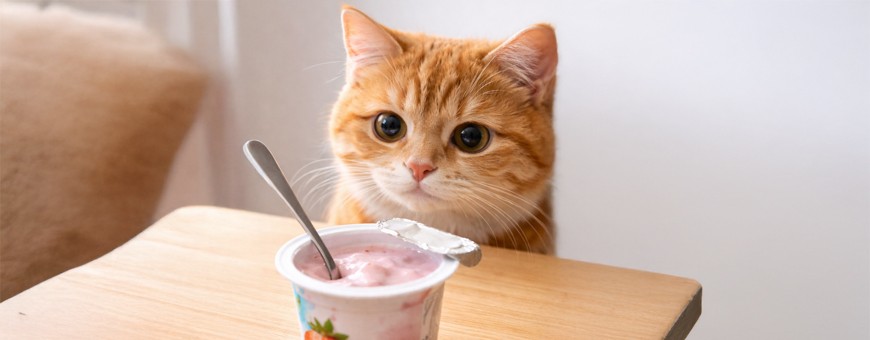
Milk and yogurt
After weaning, cats lose the lactase enzyme. In my experience, while not usually fatal, diarrhea and dehydration can be severe.
Sugar
It causes hyperglycemia and, in the long term, liver and eye problems. It contributes absolutely nothing positive.
Can a cat eat dog food?
No.
Dog food is not nutritionally adequate for cats. It has less meat, more vegetables and, most seriously, it does not provide enough taurine, an essential amino acid whose absence can be critical.
Symptoms of food poisoning in cats
- Vomiting or diarrhea
- Lethargy or weakness
- Lack of appetite
- Tremors
- Difficulty breathing
If they appear, do not wait.
What to do if your cat eats something forbidden
- Immediately remove the food.
- Do not try to induce vomiting without veterinary instructions.
- Contact your veterinarian or emergency services.
- Indicate what they ate, how much, and when.
Frequently asked questions about what cats can and cannot eat
What are cats forbidden to eat?
Chocolate, onion, garlic, alcohol, grapes, raisins, avocado, nuts, raw food, and dog food.
What is the most toxic thing for cats?
Chocolate, foods with alcohol, and the Allium family (onion, garlic, and leek).
What human food can cats eat?
Small amounts of well-cooked meat or fish, without salt, without spices, and without bones.
What are cats never allowed to eat?
Chocolate, alcohol, onion, garlic, grapes, raisins, and products with caffeine.
What is poisonous for a cat to eat?
Any food with theobromine, alcohol, or compounds from garlic and onion.
What homemade food can be given to a cat?
Lean meat or well-cooked fish, without seasonings, and always as a supplement, not as a base diet.
Leave a Reply Cancel Reply