






Cat Age Chart: Human-to-Cat Years Conversion & Life Stages Guide
If you have ever found yourself staring at your cat thinking “okay… but what would this be in human terms?”, you are not alone. Feline age is not a simple “multiply by 7” rule. What is useful is to understand two things: an approximate equivalence to human years (to orient ourselves) and, above all, what stage they are in and what care suits them best.
It is recommended to organize it this way: first, a quick rule for a general estimate, then a table for more accuracy, and finally the map of stages (which is where the difference in nutrition, play, and health is truly noticed).
How is a cat's age calculated?
The most practical way (and the one that works best as a guide) is this: a cat's first year is equivalent to about 15 human years, the second year adds approx. 9 (totaling ~24), and from then on, about 4 human years are added for each feline year. It is not exact mathematics, but it serves to compare life stages.
What helps most is not the number itself, but seeing that a cat “grows” immensely at the beginning: in months, it goes from a baby to a teenager with infinite energy. Therefore, in the first year, care (nutrition and socialization) is crucial.
Quick rule (for mental calculation)
- 1 cat year = 15 human years
- 2 cat years = 24 human years
- 3 years = 28, 4 years = 32, 5 years = 36 (approx. +4 per year)
- 10 years = 56 (approx.)
- 15 years = 76 (approx.)
Quick table by milestones (to orient yourself in seconds)
- 6 months: feline adolescence (lots of play and exploration)
- 1 year: =15 humans (no longer a “baby”)
- 2 years: =24 humans (youth)
- 5 years: =36 humans (young adult)
- 10 years: =56 humans (mature)
- 15 years: =76 humans (geriatric)
Note: genetics, lifestyle (indoor/outdoor), weight, and health significantly change “how that age looks.” The number guides; behavior and health rule.
Cat life stages and the care needed in each one
This is the part that truly improves life as a guardian. It is key to understand that each stage has its “mission”: in some it is socialization, in others it is energy expenditure, and in others it is prevention (kidneys, weight, joints).
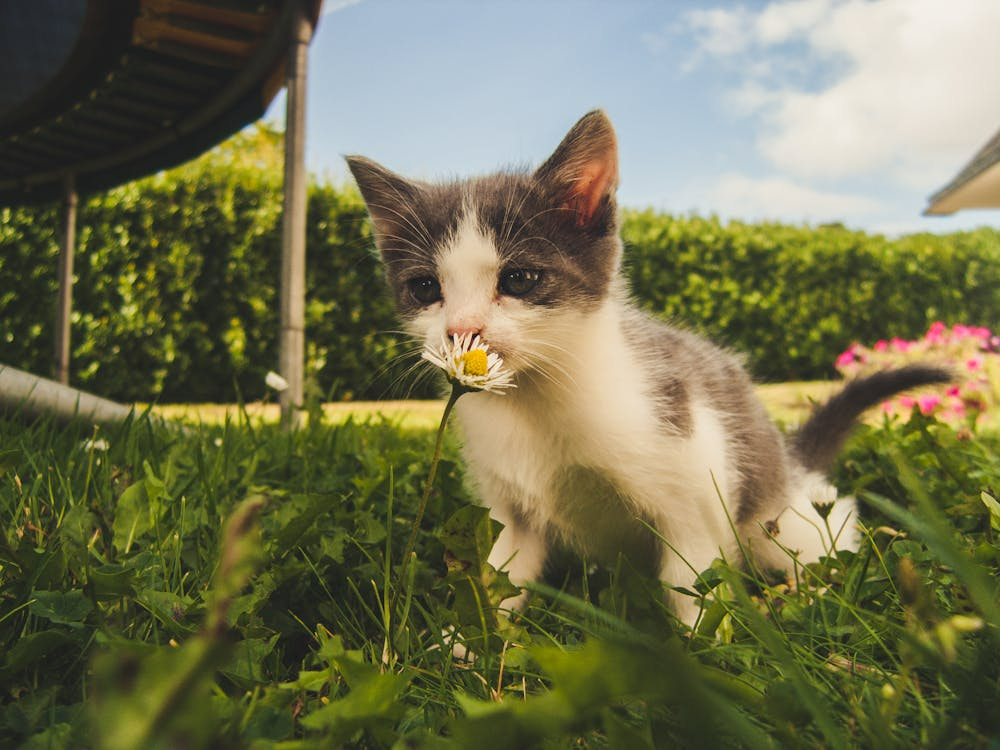
Kitten (0–6 months): weaning, socialization, and behavioral foundations
In this stage, the cat is a sponge. Nursing occurs in the first month and, around week 4–5, weaning usually begins with wet food or moistened kibble. It is very noticeable: if the change is abrupt, diarrhea or rejection appears; if done gradually, everything goes smoother.
And most importantly: socialization between 2 and 7 weeks. Getting them used to noises, visitors, and carriers early makes them less “dramatic” with travel or vet visits as adults. Additionally, it is highly recommended that they spend, if possible, the first 3 months with their mother: they learn feline manners by imitation (biting more gently, self-control, hygiene).
Key care:
- Vaccinations according to veterinary schedule and deworming.
- Planned sterilization (discuss the best timing with the vet).
- Short and frequent play sessions to develop coordination without overexciting.
Junior / young (7 months–2 years): energy, play, and sexual maturity
This is the “teenager age”: full energy, unchecked curiosity, and sexual maturity. If there is not enough play, behaviors like “biting your ankles” or “knocking things over at 3 a.m.” appear. Here, play is not a luxury: it is mental hygiene.
If they are not sterilized, heat cycles, marking, or intense meowing may appear. And nutrition must match the activity level: a junior cat that runs like crazy is not the same as a calmer indoor one.
Key care:
- Play routine (hunting: wands, balls, puzzles).
- Enriched environment: heights, scratchers, hiding spots.
- Consider sterilization to prevent behavioral and health problems.
Young adult (3–6 years): established habits and smart prevention
Here the “definitive” personality is noticed. They continue to play but with clearer patterns: there are cats that become routine “hunters” and others that are more sofa-oriented. In this phase, the most useful thing is prevention: stable weight, monitored teeth, and stress control.
It is the ideal time to fine-tune what works: feeding schedules, types of play, and “safe zones” at home. If left to their own devices, habits like begging for food all day can start… and that is where obesity begins.
Key care:
- Maintain activity (even 10–15 min of play a day).
- Weight control and measured snacks.
- Periodic check-ups (even if they seem “perfect”).

Mature (7–10 years): less energy, more rest, and watch the kidneys
Many cats slow down here: more naps, fewer sprints. And if it's not adjusted, weight increases easily. This is the stage where adjusting the diet and improving hydration saves trouble.
A trick that works: water fountains. Drinking more helps care for the urinary system and, in general, in mature cats, it is important to be vigilant as the risk of kidney problems increases over time.
Key care:
- Finetuned diet (calories and quality).
- Hydration: fountains, wet food, multiple water points.
- Observe subtle changes: less play, more thirst, litter box changes.
Senior (11–14 years): check-ups, chronic issues, and comfort
Here rest rules and play usually drops significantly. It is also the stage where chronic diseases can appear or worsen (and yes, sometimes tumors). What changes the game most is being proactive: a check-up at least once a year (many families opt for every 6 months if the cat already has a history).
It is essential to stop thinking “they are old, it's normal” and start looking for signs: drop in appetite, weight loss, strong bad breath, changes in mood or litter box habits.
Key care:
- Regular veterinary check-ups (minimum annual).
- Senior nutrition if suitable and muscle mass control.
- Adapt the house: easy access to bed, water, and litter box.
Geriatric (15+): osteoarthritis, possible cognitive changes, and comfort
The keyword here is comfort. Typical problems: osteoarthritis (joint pain) and, sometimes, signs compatible with cognitive decline: nocturnal meowing, disorientation, or urinating outside the box. Often it is not “malice” or “revenge”: it is pain, confusion, or difficulty reaching the box.
What helps most is adjusting the environment: low-entry litter boxes, small ramps, heated beds, stable routine. And yes: more frequent check-ups, because at this age any change should be looked at quickly.
Key care:
- Frequent vet visits (depending on the case, every 3–6 months).
- Pain management (never self-medicate).
- “Gentle” environment: fewer jumps, more accessibility.

How to know a cat's age if it is adopted or unknown
If a cat has been adopted and nobody knows its age, it can be estimated “by eye” with physical clues. It is not perfect, but it places the animal in an approximate stage to decide on diet and check-ups.
Useful clues for orientation:
- Teeth: in youngsters, there is usually whiteness and little tartar; with age, wear and accumulation appear.
- Eyes: some older cats show slight cloudiness or changes in brightness (Note: this does not replace a check-up).
- Body: muscle mass, mobility, coat quality, and nails can provide clues.
- Behavior: energy, play, sleep, and stress tolerance change over the years.
When to confirm with the vet: If the cat has symptoms (loss of appetite, weight loss, drinking a lot, changes in urine, limping, apathy), it is worth a check-up and, if appropriate, blood work. When something is caught in time, the prognosis is usually much better.
Myths about cat ages
Why “1 human year = 7 cat years” is not exact: That myth simplifies things too much. Cats mature very quickly at the beginning: the first year is not equivalent to “only 7,” but to an enormous stage of development. That is why the practical rule (15 the first, +9 the second, then +4) usually fits the reality of feline growth and aging better.
Frequently Asked Questions
How is a cat's age calculated?
An approximate equivalence is used: 1st year ≈ 15 human years, 2nd ≈ 24, and then about 4 human years are added for each feline year. It is a useful guide for understanding stages, not an exact science, as genetics, health, and lifestyle play a role.
How many years is 1 cat year?
Approximately 15 human years. That first year “weighs” a lot because the cat goes through rapid development (from kitten to feline teenager), and that's why it's key to properly care for nutrition, play, and socialization.
What is the 3-3-3 rule for cats?
It is an adaptation guide after adopting: 3 days to decompress, 3 weeks to enter a routine, and 3 months to feel at home. It doesn't talk about age, but helps understand normal stress behaviors at the beginning.
How much is 10 years in a cat's life?
As a guide, 10 cat years ≈ 56 human years (approx.). It is a “mature” stage: they usually slow down energy-wise, sleep more, and it's advisable to monitor weight and hydration, as subtle changes start to show.
Is a 10-year-old cat considered old?
It is usually considered mature and approaching senior depending on the case, but “old” depends on its status: mobility, muscle mass, teeth, and blood work. It is the ideal time to fine-tune the diet and do more preventive check-ups.
What are the signs that a cat is near the end of its life?
Sustained signs like stopping eating or drinking, hiding, marked weakness, unusual breathing, or not getting up normally are reasons to consult. The most important thing is to speak with the veterinarian to assess pain, quality of life, and comfort options without prolonging suffering.
This article about cat age conversion and life stages is really practical and clear! I’ve also been researching related topics recently and put together a simple cat age calculator for quick conversions and reference: https://catyearscalc.com/