




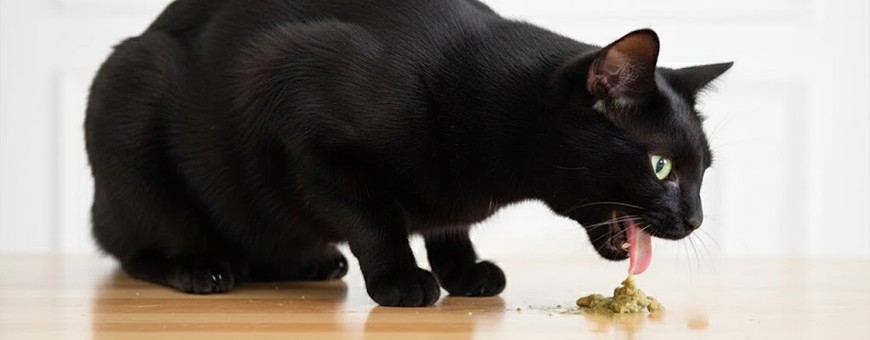
Vomiting in Cats: Common Causes, Types by Color, and What to Do
Vomiting in cats is one of those things that many people "normalize" because it sounds like just a hairball. But if it repeats, if the cat is lethargic, or if it appears alongside diarrhea, vomiting stops being an anecdote and becomes a clinical sign that should be taken seriously.
In this guide, you have a practical approach: how to differentiate vomiting vs. regurgitation, what it can mean depending on the appearance, what to do safely at home, when to go to the vet, and how to reduce the likelihood of it happening again.
Is it normal for a cat to vomit? (and when it is NOT)
The most useful way to think about it is this: vomiting is not "normal," although it can occur occasionally. An isolated episode might happen due to overeating or expelling a hairball, but the pattern changes when:
- It occurs more than once a day.
- It is repeated several times a week.
- It is accompanied by diarrhea, apathy, fever, pain, weight loss, or lack of appetite.
- The cat does not retain water or becomes dehydrated (note: vomiting + diarrhea = real risk of dehydration).
The practical rule for home (and also for advising in-store) is: occasional vomiting + cat feels fine = monitor; frequent vomiting or cat feels unwell = veterinarian.
Vomiting or regurgitation: how to tell them apart
This is often confused, and it changes the "why" and "what to do."
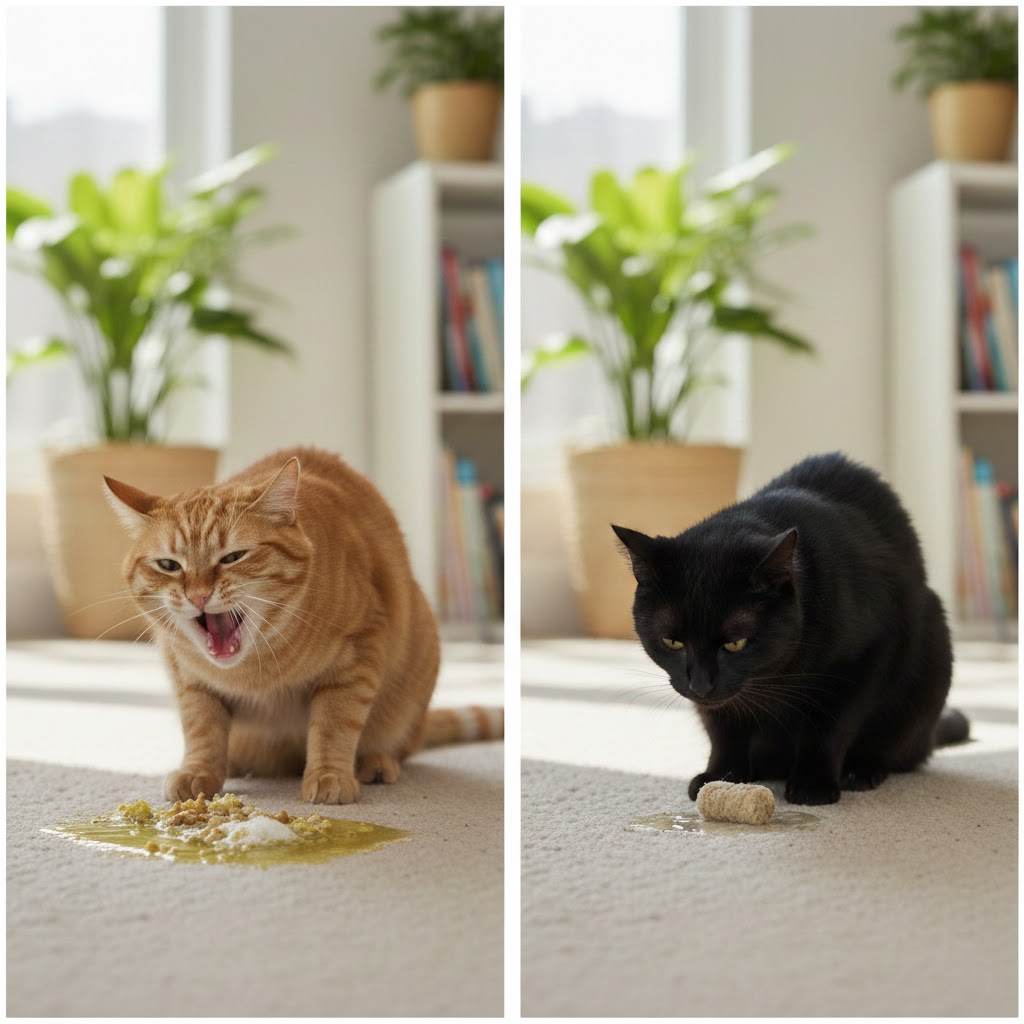
Regurgitation (usually immediate)
- Happens shortly after eating.
- Food comes out almost whole, barely digested.
- Sometimes it seems more like "bringing it back up" than vomiting with retching.
In cats, regurgitation may be related to eating too fast, food anxiety, or issues in the esophagus.
Vomiting (more digestive)
- Usually accompanied by retching, nausea, or prior salivation.
- The content may come out more liquid, with bile, foam, or already "mixed" food.
Useful tip: if the content looks like whole kibble/croquettes and happens right after eating, think of regurgitation or overeating first.
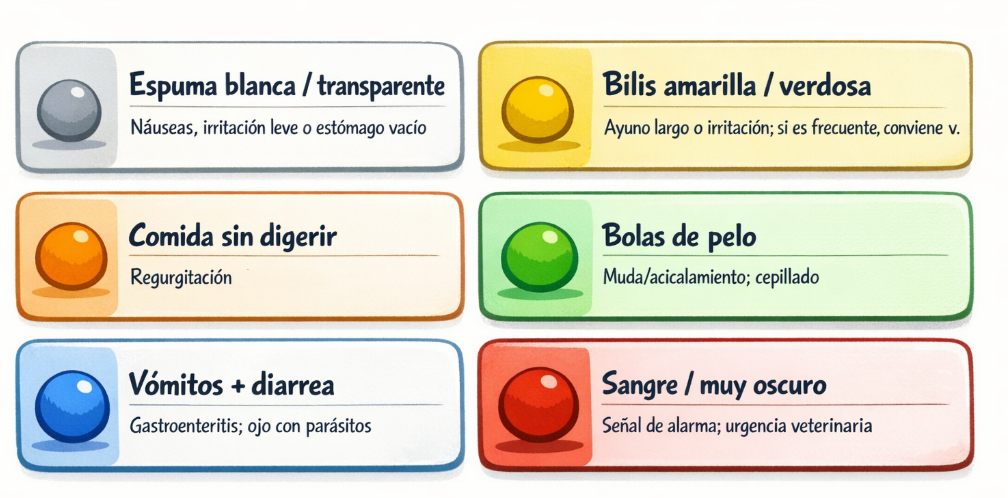
Types of cat vomit and what they may indicate
Important: this provides guidance, not a diagnosis. Frequency + general state + symptoms are what matter most.
White or transparent foam
Can appear with an empty stomach, nausea, or gastric irritation. If it is repeated (for example, several mornings in a row), it is advisable to check feeding schedules, stress, food tolerance, and rule out medical causes.
Yellow or greenish bile
Often associated with an empty stomach (in the morning, or when many hours pass without eating), but if frequent, it should not be automatically attributed to "hunger." There may be gastritis, biliary reflux, intolerances, or other issues.
Undigested food
If it happens right after eating and the food comes out whole, it fits more with regurgitation or eating fast. If it appears hours later, it may point to poor digestion, gastritis, or other processes.
Hairballs
Usually occurs during shedding seasons or in cats that groom themselves a lot. If hairballs appear very often, it's time to review prevention: brushing, constipation control, and fiber/malt strategy depending on the case.
Blood or very dark appearance
Red (fresh blood) or dark black/brown like "coffee grounds" → veterinary emergency. If there is also weakness, pale gums, or pain, do not wait.
| Appearance / Situation | May fit with… | What to do now |
|---|---|---|
| Whole food right after eating | Regurgitation, overeating, anxiety | Small portions, slow feeder bowl, observe |
| Occasional white foam | Nausea/mild irritation, empty stomach | Monitor for 24 h, offer water, mild food in small amounts |
| Occasional yellow bile | Long fasting, irritation | Adjust schedules (more feedings), monitor for repetition |
| Hairball | Shedding/grooming | Brushing, hairball plan; if frequent, check diet and vet |
| Vomiting + diarrhea | Gastroenteritis, parasites, intolerance | Dehydration risk: if repeated, see vet |
| Blood or “coffee grounds” | Digestive bleeding | Emergency |
| Repeated vomiting / lethargy | Underlying problem (includes systemic) | Veterinarian |
Common causes of vomiting in cats (by categories)
1) Binge eating and eating too fast
This is very common: the cat eats with anxiety, and the stomach "expels" what just entered. Practical measures fit here: smaller portions, several feedings a day, and slow feeder bowls.
2) Gastroenteritis (and when accompanied by diarrhea)
Can last for days and be associated with diarrhea. Although some cases are mild, the risk of dehydration rises significantly if there is repeated vomiting, diarrhea, or if the cat does not drink.
3) Digestive irritation, intolerances, or sudden diet changes
A change in kibble without transition, new treats, human food scraps, or intolerances can cause irritation. In retail, this is key: often the solution is less about "changing randomly" and more about correct transition + digestive diet.
4) Parasites and infections
Intestinal parasites and infections can cause vomiting, diarrhea, or both. If the cat goes outdoors or there are doubts about deworming, it should not be ruled out.
5) Stress and anxiety
Changes at home, moving, new animals, construction work... Stress affects the digestive system and can worsen grooming (more hair ingested).
6) Foreign bodies and toxins
Threads, ribbons, small toys, plant spikes, toxic plants... If suspected, do not wait: some foreign bodies can cause obstructions.
7) Systemic diseases (kidney, liver, pancreas…)
This is where it’s best not to stay only with "something they ate." Problems in organs like the kidney, liver, or pancreas can also manifest with vomiting, especially if there is weight loss, excessive thirst, apathy, or recurrent vomiting.
What to do at home after vomiting (step by step)
If it was an isolated vomit and the cat is active, without diarrhea or strange signs:
- Remove food for a while and observe (without extra "punishments" or stress).
- Make water available. Small sips are better than drinking excessively. Do not force.
- After a few hours, offer mild food/gastrointestinal diet in small portions.
- Monitor for the next 24 hours: Does the cat vomit again? Is it lethargic or hiding? Is there diarrhea? Does it drink and urinate normally?
What NOT to do
- Do not give human medication (antiemetics, painkillers, antacids) without a vet.
- Do not make sudden kibble changes "just because."
- Do not ignore warning signs thinking that "it just happens to cats."
When to go to the vet (clear checklist)
Go to the vet today (or emergency) if any of these points occur:
- Repeated vomiting (several in one day) or a pattern of several times a week.
- Intense diarrhea, blood, fever, pain, swollen abdomen.
- The cat is apathetic, not eating, not drinking, or not retaining water.
- Red blood or dark vomit like "coffee grounds."
- Suspicion of a foreign body or toxin.
- It is a kitten, a senior, or has previous illnesses.
This approach is especially important because frequent vomiting (and even more so with diarrhea) can lead to dehydration in a short time.
How to prevent vomiting in cats (routines + useful products)
Food transition (7 days)
If changing kibble, do it gradually:
Days 1–2: 75% old / 25% new
Days 3–4: 50/50
Days 5–6: 25% old / 75% new
Day 7: 100% new
Avoid overeating
- Smaller portions and more feedings per day.
- Slow feeder bowls or dispenser toys if there is anxiety.
Hairballs: a realistic plan
- Regular brushing (more during shedding).
- Fiber/malt support when it makes sense.
- If there are very frequent hairball vomits, review diet and rule out other problems.
Hygiene and health prevention
- Deworming according to veterinary guidelines.
- Avoid access to threads, ribbons, toxic plants, and small objects.
FAQ
When is a cat's vomiting concerning?
When it repeats several times a day or several times a week, when there is diarrhea/apathy/pain, when the cat doesn't retain water, or blood appears. In those cases, the prudent thing is to see a vet.
What can be given to a cat that is vomiting?
Make water available and, if it is an isolated episode and the cat is fine, a digestive diet in small portions when tolerated. Avoid human medication and sudden food changes without veterinary guidance.
What does a cat's normal vomit look like?
There is no such thing as "normal vomiting." There may be an occasional vomit due to a hairball or overeating, but if it repeats, it indicates something is wrong.
What do the different types of cat vomit mean?
Immediate whole food suggests regurgitation/overeating; white foam or bile may be an empty stomach or irritation; hair is usually grooming; blood or dark vomit is urgent.
What color of vomit is dangerous in cats?
Red (fresh blood) or dark black/brown like "coffee grounds" is a sign of urgency. Repeated yellow/green also requires review if there is frequency or other symptoms.
What color is the vomit from pancreatitis in cats?
There is no diagnostic color. It can be yellowish or variable. The important thing is the set of symptoms: persistent vomiting, pain, apathy, anorexia, and dehydration → veterinarian.
Leave a Reply Cancel Reply